

She Froze Her Eggs at 38, Had Twins at 41, and Wrote the Book on Doing It Alone
Connie Rutherford always knew she wanted to be a mother. But she never could have predicted how long the road would be or what it would demand.
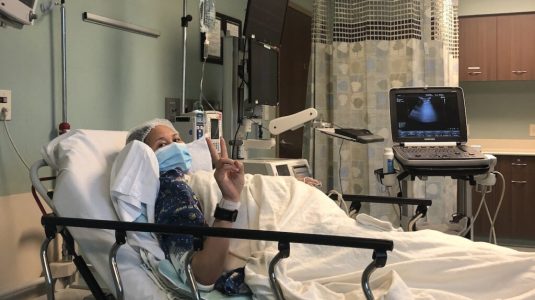
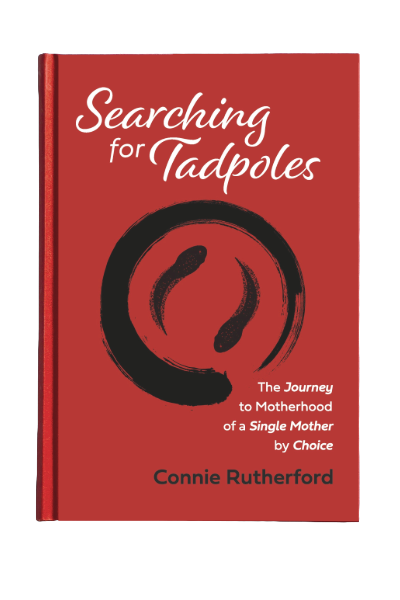
A former Wall Street professional based in New York, Connie began freezing her eggs at 38, went on to pursue single motherhood by choice at 40, and delivered twins via C-section at 41—during a global pandemic, no less. Since then, she’s written Searching for Tadpoles, a memoir about the experience she hopes will give other women a firsthand look at her journey.
We sat down with Connie to talk about fertility, decision-making, donor selection, what great care looks like from the inside, and why she has zero regrets.
Was becoming a mother something you always knew you wanted?
Always. I was an only child, so I grew up wanting a sibling, wanting a family around me. When I was a teenager, my friends would doodle wedding dresses and engagement rings. I was doodling baby names. I never really thought about the wedding, just the babies. So yes, motherhood was always the goal.
At what point did you decide to pursue that on your own, without a partner?
It wasn’t one dramatic moment. I was 38, living in New York, where the pace of life swallows everything. When I stopped and looked at where I was, I didn’t have a partner, and I could see my AMH levels declining at each appointment. I decided to start egg freezing as an insurance policy. That bought me a little time.
At 40, after a lot of reflection and one very honest conversation with my best friend, who told me my dating patterns weren’t healthy and that if I wanted a baby, I should just go get my baby, I decided to move forward as a single mother by choice.
You were working on Wall Street when you made this decision. How did the financial and logistical realities of fertility treatment factor in?
I had actually just started a new job when I began egg freezing, which meant a lot of early-morning doctor appointments during the monitoring phase. I made the choice to tell my hiring manager upfront. Luckily, she was a woman, she was single herself, and she was genuinely interested in what I was doing. She was completely understanding.
On the financial side, egg freezing is expensive, and insurance doesn’t cover it. I had savings, but it’s a significant commitment. You have to go in eyes open about that.
The phrase ‘single mother by choice’ sounds confident. Were you?
Honestly? No. Not at first, and not always. My dad was diagnosed with aggressive stage 4 prostate cancer around the time I was starting to seriously consider this, and that reality—that my kids might not get to know their grandparents—pushed me to stop waiting.
But when I actually got pregnant, my parents weren’t supportive initially, which shook my confidence all over again. And I still have moments of doubt now, even with the girls here. I’m just doing the best I can every day. I don’t think any parent is ever fully confident. It’s more like you take it minute by minute.
Walk us through what your treatment looked like.
I did two egg freezing cycles at 38, and banked 16 eggs total. At 40, once I’d decided to pursue single motherhood, I did four IUIs, and none worked. Dr. Klein recommended we pivot to a hybrid cycle: thawing nine of my frozen eggs while simultaneously attempting a fresh IVF cycle.
My body didn’t respond well to the IVF medications that round, so we moved forward with just the thawed eggs. We got five embryos and tested them via PGS (preimplantation genetic screening; now known as PGT-A). Four came back abnormal. One was undetected (‘no result’). I was devastated. This was supposed to be my insurance policy.
I’d read an article around that time about New York doctors raising questions about the accuracy of PGS testing, and the possibility that some embryos flagged as abnormal might self-correct given more time. I asked Dr. Klein if we could transfer the undetected one. We did. It didn’t implant. Then we moved to a fresh IVF cycle.
This time, my body responded. I got five embryos again, but I opted out of PGS. I asked the embryology team to grade them the old-school way, under the microscope, ranked by morphology and symmetry. Dr. Klein suggested transferring the top two. He was straightforward about the odds: less than 1% chance both would take. We transferred them both, and they both took.
What was it like finding out you were having twins?
I went into the beta test convinced I wasn’t pregnant. I had been spotting and didn’t want to make the trip into the city for bad news. The nurse talked me into coming in. When she called with the results, she told me I was pregnant, and then said my HCG levels were very high, so it might be twins. I did not handle that gracefully. I think I said, “WTF.”
When I went in for the ultrasound and Dr. Klein showed me the screen, I couldn’t see what he was seeing. He was laughing, and I was like, ” What is so funny?” He said, “There are two.”
I was genuinely shocked. I’d wanted one child my whole life, and apparently, the universe had other plans.
You’ve spoken highly of the care you received at Extend Fertility. What made it stand out?
The difference was that it felt like a family. I’d been to another clinic before Extend, and when I called there, I had to re-explain my situation every single time.
At Extend, the receptionist knew my voice. The staff greeted me by name when I walked in. When a cycle didn’t work, people were genuinely sad for me — not going through the motions, actually rooting for me. That human element matters so much in fertility treatment because there are no guarantees in this field. Every body is different. You can’t promise outcomes. What you can offer is support and honesty.
Dr. Klein always gave me the full picture, but he never left me in a dark place. He would always end with something like, “But it only takes one.” When I asked him to transfer the undetected embryo after PGS, he simply said, “I’ll pray for you.” I started crying. That’s what great care looks like.
Your twins were born via C-section at 38 weeks during COVID. What was that experience like?
It was a lot. COVID meant the nursery was closed, no support classes, no car seat installation services at the fire station. Everything I’d planned on learning, I had to figure out on my own or skip entirely.
I also lost a significant amount of blood during surgery and needed blood transfusions, which made the recovery even harder. I was in the room with my mom and two newborns, one of whom kept choking, trying to breastfeed, and doing all of it while healing from major abdominal surgery.
One nurse saw how much I was struggling and offered to take the babies to the nursing station for a few hours so I could sleep. That wasn’t standard protocol, and she told me so, but she did it anyway. I nominated her for a Daisy Award. Sleep is not something you fully appreciate until you are begging for two hours of it.
How did you build your support system, especially as a single parent?
I had a really hard time asking for help. Part of it was a sense that I’d chosen this, so I should be able to manage it all. That thinking led to a lot of anxiety, and I eventually realized I was having panic attacks from not letting anyone in.
COVID made it even harder in those early months because my existing support network was in New York while I was in New Jersey, and everyone was keeping their distance anyway. Over time, I had to actively build a new village—parents of my daughters’ friends, people who were in the same season of life I was. It didn’t happen organically. I had to work at it. And I had to get comfortable with the words “I need help.” I’m still working on that, but I’m getting better.
Tell us about the book and what ‘tadpoles’ have to do with any of this.
I started writing during my pregnancy. I wanted a resource that would have helped me—something that explained the medical terminology, the process, what to expect at each stage, so that when a doctor mentioned PGS or a hybrid cycle or IUI, I wouldn’t be starting from zero. Every woman’s protocol will be different, but having a framework makes the journey feel less isolating.
Tadpoles are metaphorical in three ways. I dated a lot, kissed a lot of frogs hoping one would turn into a prince. Tadpoles also look like sperm, which is convenient for a book about donor conception that I didn’t want to have to explain to a five-year-old who picked it up off the coffee table.
And in Asian culture, frogs are associated with fertility and good fortune. My mother is Taiwanese, so that one felt right. The title also gives me something to say when my girls eventually ask questions I’m not quite ready to answer yet.
Finding a sperm donor is its own process. How did you approach it?
It took longer than I expected. I’m CMV negative, which narrowed my options significantly. I was also looking for a Black donor (my dad is Black), and the pool is much smaller than it should be, largely because sperm banks haven’t historically marketed to African American communities. Out of thousands of donors on these platforms, filtering by ethnicity might return 50 results. Filtering further for CMV status gets you far fewer.
What I found most meaningful in my search was the donor’s own words. Most donors write a letter about why they’re doing it and who matters most to them. I’d approved one donor on a Friday, but over that weekend, I saw a new profile come in. His baby pictures were incredibly cute, but what really decided it was that he wrote at length about his father being the most important person in his life. My girls weren’t going to have a dad in the traditional sense. Something about the donor having that relationship, loving his father that way, mattered to me.
Monday morning, I called and said, I know you just screened someone last week, but I need you to look at this new one. Dr. Klein didn’t hesitate.
If a woman in her late 30s is reading this and hasn’t taken any steps yet, what do you tell her?
First, I’d ask where she’s at. Does she know she wants kids, or is she still figuring that out? If she knows, I’d ask whether she’s financially, physically, and mentally in a place to move forward.
If the answer is yes, start now. I gave birth at 41. I was a runner. I exercised, I took care of myself, I thought I had the energy. I was wrong. Motherhood at 41 with twins is a different kind of tired than anything that came before it. The earlier you can do this, the more energy you’ll have for it.
If she’s not ready to commit to parenthood yet, I’d tell her to freeze her eggs, or seriously consider freezing embryos, which is something I wish had been discussed more in my own case. And whatever path she’s on, I’d remind her that it might not happen quickly. Fertility treatment takes time, and the timeline is rarely what you expect. Starting sooner just means you have more options.
Searching for Tadpoles is available on Amazon, BookBaby, Barnes & Noble, and other platforms where books are sold.