

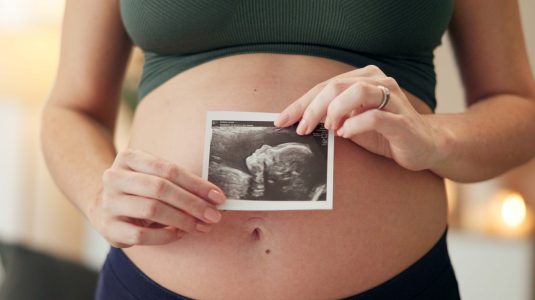
If you’ve visited a fertility clinic or spent time going down late-night Google rabbit holes, you’ve likely encountered the question: Do IVF, IUI, or other assisted reproductive technologies increase the risk of having a child with autism?
It’s a heavy question, often fueled by headlines that prioritize clicks over context. This is especially true during Autism Acceptance Month, when public conversation around neurodiversity ramps up.
Based on the best current evidence, the answer to this question is no.
Let’s take a look at some earlier studies to understand why the risk narrative exists and what the latest science says.
What is Autism?
Autism spectrum disorder (ASD) is a lifelong neurological difference that shapes how people communicate, process sensory information, and move through the world. Because the spectrum is so broad, no two people with autism are the same; they have different support needs and unique cognitive strengths, like deep pattern recognition and intense focus.
The CDC estimates that 1 in 31 children in the U.S. has been identified as having autism. While that number has grown, researchers don’t believe there’s a surge in autism—we’ve just gotten better at recognizing it and expanded the criteria for diagnosis.
The neurodiversity movement has shifted how many clinicians, researchers, and autism advocates frame the condition. The term ‘risk’ is often controversial because it implies that autism is a negative outcome. While we use clinical terms here, it’s important to remember that many advocates view autism as a natural part of human variation, not a medical error.
Why Does Fertility Treatment Come Up?
Rates of assisted reproductive technologies (ART) and ASD diagnoses have both increased in recent years. When two trends mirror each other, it’s easy to assume they’re related. But correlation is not causation.
Earlier studies did suggest a connection between ART and elevated autism rates. These findings generate alarming headlines and fuel a lot of the anxiety patients bring into fertility clinics today. But the studies lacked adequate control for who was actually pursuing treatment and why. This gap is a major flaw.
What the Latest Research Shows
The largest, most controlled studies in this area are consistent: when researchers account for who is pursuing fertility treatment and what causes their infertility, IVF and IUI are not associated with increased autism risk.
A 2023 study published in JAMA Network Open followed more than 1.4 million children born in Ontario, Canada, between 2006 and 2018. Researchers compared autism diagnosis rates across groups: children born to parents with no fertility challenges, children born to subfertile parents (those with underlying fertility challenges) who conceived with treatment, and children conceived through ovulation induction or IUI, or through IVF or ICSI (a form of IVF in which a single sperm is injected into an egg).
The authors concluded that IUI and IVF “do not appear to introduce any measurable risk of ASD, compared with having subfertility alone.” Underlying infertility, not treatment, is likely the relevant variable.
In a 2024 cohort study published in the Journal of Assisted Reproduction and Genetics, researchers analyzed more than 115,000 pregnancies. They found that fertility treatment was not significantly associated with increased ASD risk.
Why the Biology of Infertility, Not Treatment, Is What Matters
Parental age is one of the strongest non-genetic risk factors for autism, especially advanced paternal age. People who pursue IVF tend to be older than the broader parent population. In studies that don’t account for this factor, autism risk gets attributed to the treatment instead.
Underlying infertility conditions are also important. Polycystic ovary syndrome (PCOS) and endometriosis—both common contributors to infertility—are associated with slightly higher autism rates in offspring, regardless of how conception takes place. Children born to subfertile couples who conceived with any ART show similar autism rates to those who used it. The correlation points to the biology underlying infertility, not the interventions used to address it.
Multiple gestations played a role in the older data. IVF was historically associated with higher rates of twin and triplet pregnancies, and multiple pregnancies carry an elevated risk of preterm birth and low birth weight. Both are linked to a range of developmental outcomes, including autism.
Single embryo transfer is now standard practice, so this variable is far less relevant in more recent data. But it does explain the risk signal in earlier research.
What This Means for Patients Seeking Fertility Treatment
IVF and IUI do not cause autism. The most rigorous modern science shows that these treatments are safe and do not introduce new developmental risks.
If you have a family history of autism or specific genetic concerns, tools like Preimplantation Genetic Testing (PGT) and genetic counseling are available. These are great resources for peace of mind, but consider them on their own merits, not out of fear of the fertility treatment itself.
This data should give you one less thing to worry about. The ‘risk’ often mentioned in headlines comes from the complex biology of infertility, not the medicine helping you grow your family.
Autism, for many people, is a part of life. Framing autism prevention as a goal of fertility research misrepresents the intent of that research.
If you have questions about how your fertility history might affect your treatment path, we’re here to answer them. Schedule a consultation with our team.