

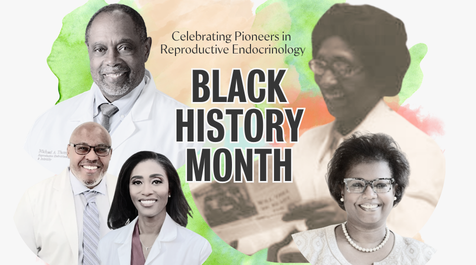
Celebrating Black Excellence in Reproductive Endocrinology and Infertility
When Helen Octavia Dickens graduated from the University of Illinois College of Medicine in 1932, she was the only Black woman in a class of 137. She later became the first Black board-certified OB-GYN in Philadelphia, the first Black woman admitted to the American College of Surgeons, and one of the most consequential figures in the history of reproductive health.
Dr. Dickens isn’t a household name, but she should be.
For decades, Black physicians and scientists have been building the science of fertility and demanding better care. They’ve redefined what’s possible for all patients.
These are a few of their many contributions, both past and present.
The Physician Who Brought Reproductive Care to Black Communities
Reproductive endocrinology didn’t become a recognized medical subspecialty until the late 1970s. Before then, the work of expanding reproductive care—building access, training physicians, and demanding treatment for Black women—fell to OB-GYNs like Dr. Dickens. Without that foundation, there is no subspecialty to speak of.
By 1948, Dr. Dickens was running the Department of Obstetrics and Gynecology at Mercy-Douglass Hospital, turning it into a training ground for Black physicians. She became one of the earliest advocates for widespread Pap smear testing, teaching the procedure to 200 Black physicians.
Dr. Dickens went directly into Philadelphia’s Black communities, including churches, to make screenings accessible and address deep-rooted mistrust in the medical system.

Helen O. Dickens and Emily Mudd (from the Collections of the University of Pennsylvania Archives)
In 1967, she founded one of the first multidisciplinary programs in the country for teenage parents at the University of Pennsylvania, bringing reproductive health education to communities where it had been most absent.
Dr. Dickens knew the system wouldn’t extend care on its own, so she created the infrastructure herself and trained the next generation to do the same.
Representing the Black Experience in Infertility Research
As the work of pioneers like Dr. Dickens matured, the field evolved. When reproductive endocrinology and infertility became a formal subspecialty, the questions Dr. Dickens had been demanding answers to for decades reemerged: who gets care? What does science show? And how do we close the gaps?
Dr. Michael A. Thomas, Chair of the Department of Obstetrics and Gynecology at the University of Cincinnati College of Medicine, has spent his career pushing those questions into research. Named one of the “Best Doctors in America” for 21 consecutive years, Dr. Thomas has authored and co-authored more than 120 scientific publications and book chapters in reproductive medicine.
He also served as Vice President of the American Society for Reproductive Medicine (ASRM) and Board Chair of the Association of Reproductive Health Professionals. In 2020, Dr. Thomas became the first African American clinical chair at UC Health.

Michael A. Thomas, MD, Chief of the Division of Reproductive Endocrinology and Infertility, University of Cincinnati College of Medicine
Black women experience higher rates of fertility-related conditions than other demographics. Uterine fibroids affect up to 80% of Black women by age 50. Black women are also less likely to seek fertility treatment and, when they do, can face disparities in outcomes.
Producing the science that documents and addresses those gaps is as important as the clinical care itself. Dr. Thomas has spent decades doing both.
Closing the Gap for Historically Underserved Patients
The work continues today with a cohort of Black reproductive endocrinologists who bring the same focus to the current generation of patients.

Erica Elizabeth Marsh, MD, MSCI, FACOG, Professor of Obstetrics and Gynecology at the University of Michigan Medical School and Chief of the Division of Reproductive Endocrinology and Infertility
Dr. Erica E. Marsh is Chief of the Division of Reproductive Endocrinology and Infertility at the University of Michigan and the founder of the Women’s Health and Reproductive Disparities Collaborative (onWHARD). She’s built her career around a key question: Why do reproductive health conditions affect Black women differently, and what can science do about it?
Dr. Marsh’s NIH-funded research on uterine fibroids, ovarian reserve, and reproductive health disparities has produced findings with direct implications for how infertility is diagnosed and treated. In 2015, the American Society for Reproductive Medicine (ASRM) recognized her work with its New Investigator Award.
She currently serves as President of the Society for Reproductive Endocrinology and Infertility.
Extending the Legacy
At Extend Fertility, our commitment to research-driven, equitable care is reflected in our team of physicians.

Melvin Thornton, MD, FACOG, Reproductive Endocrinologist, Affiliated Physician, Extend Fertility
Dr. Melvin H. Thornton II has spent over 30 years in reproductive endocrinology, including 15 years as Medical Director and Director of the Egg Donation Program at Columbia University’s Center for Women’s Reproductive Care. Double board-certified in Reproductive Endocrinology and Infertility and in Obstetrics and Gynecology, he has published more than 50 papers and presented over 100 abstracts on infertility, third-party reproductive, and women’s health.
Dr. Thornton’s research on fertility treatment for HIV-seropositive couples—a population long underserved by reproductive medicine—reflects the same conviction that’s driven his career: access to fertility care should not be determined by who you are or who you love.
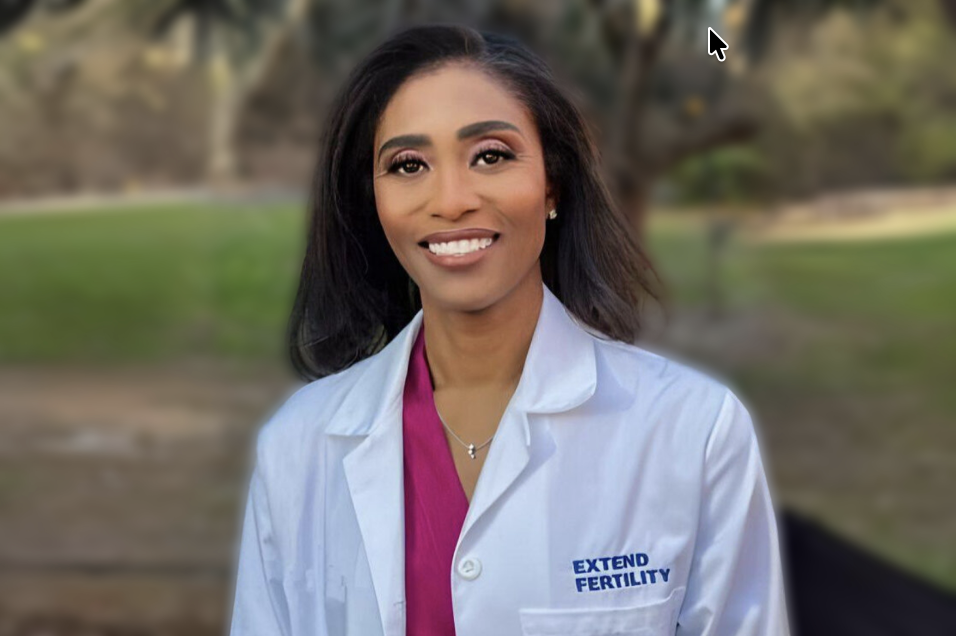
Nataki C. Douglas, MD, PhD, Reproductive Endocrinologist and Chief Scientific Officer, Extend Fertility
Dr. Nataki C. Douglas came to Extend Fertility with a specific research agenda: understanding what the uterus requires for successful embryo implantation and pregnancy.
It’s a question with direct implications for IVF outcomes and fertility preservation, and one Dr. Douglas has pursued across academic medicine—first at Columbia University’s Center for Women’s Reproductive Care and later as Associate Professor and Director of Translational Research for the Department of Obstetrics, Gynecology and Women’s Health at Rutgers-New Jersey Medical School, where she holds a concurrent appointment today.
As a Reproductive Endocrinologist and Chief Scientific Officer at Extend, Dr. Douglas co-led the clinic’s 8-year egg freezing outcomes study, presented at the 2024 ASRM Conference. The study analyzed data from more than 4,000 egg freezing cycles and confirmed that egg freezing produces reliable results.
It also revealed that the age at which a patient freezes their eggs is among the most significant factors in eventual success.
“Despite skepticism around egg freezing, this study proves it’s a reliable, science-backed option,” says Dr. Douglas. “It’s not for everyone, but for many, it’s life-changing and offers real outcomes.”
Her most recent published research examined the role of retinoic acid, derived from vitamin A, in embryo implantation. It moves past the ‘if’ of fertility treatments to the ‘why,’ seeking new ways to make care more effective for more people.
The Work Ahead
Through the years, physicians and researchers have refused to accept the cracks in the system, building the science and systems to address them. But their work is far from over.
Black women are less represented in the clinical research shaping the delivery of fertility care. Overcoming those barriers requires ongoing research based on real patient data and physicians committed to making sure that data isn’t lost.
Physicians like Dr. Douglas and Dr. Thornton are producing evidence that changes what fertility care looks like for everyone. At Extend, we’re creating a path for the next generation of Black researchers and clinicians to do the same.
Learn more about our latest research on egg freezing outcomes.
Schedule a consultation with one of our providers